





Introduction
Beaconsoft’s latest tech refers to the newest software solutions and system upgrades introduced by Beaconsoft focused on cloud-based architecture, automation, AI-driven analytics, and enterprise-level security. It combines workflow management, real-time data tracking, and scalable infrastructure to help businesses improve efficiency and reduce operational costs.
Software companies constantly evolve, but few manage to deliver innovations that actually solve real problems. Beaconsoft has been making waves with its recent technology releases that focus on practical business solutions rather than just flashy features.
If you’re evaluating new software for your business or just curious about what’s emerging in enterprise technology, understanding Beaconsoft’s latest offerings matters. Their recent updates address common pain points like system integration, data security, and workflow automation.
In this article, you’ll learn about Beaconsoft’s recent software releases, their key features, practical applications, and how they compare to existing solutions in the market.
Understanding Beaconsoft’s Technology Direction
Beaconsoft has shifted focus toward modular software architecture. Instead of building massive all-in-one platforms, they create specialized tools that connect seamlessly.
This approach solves a major problem. Many businesses already use multiple software systems. Forcing them to replace everything creates resistance and high costs.
Their latest technology works alongside existing tools. It fills gaps rather than demanding complete overhauls.
Recent Software Releases from Beaconsoft
Cloud Management Platform
The newest cloud platform from Beaconsoft simplifies multi-cloud management. Many companies use services from AWS, Azure, and Google Cloud simultaneously. Managing all three separately creates confusion. This platform provides one dashboard for all cloud resources. You can monitor costs, performance, and security across providers.
For example, a marketing agency in New York reduced cloud spending by 23% after identifying duplicate services across platforms. They spotted the redundancy within the first week of using the tool. The interface prioritizes clarity. You don’t need deep technical knowledge to understand your cloud infrastructure.
AI-Powered Analytics Suite
Data analytics often requires specialized skills. Beaconsoft’s new analytics suite uses AI to make insights accessible to non-technical users. You ask questions in plain English. The system analyzes your data and provides visual answers. A retail chain in California used this to understand seasonal buying patterns. Their marketing team, with no data science background, identified that certain products sold better when bundled together. The AI learns from your business context over time. Recommendations become more relevant as they understand your specific operations.
Integrated Business Management System
This system connects project management, customer relationship tools, and financial tracking in one environment. The key innovation is automatic data synchronization. When your sales team closes a deal, it updates project timelines, resource allocation, and revenue forecasts simultaneously. A construction company in Texas reduced administrative time by 40%. Project managers stopped entering the same information into multiple systems. The software includes mobile apps with offline capability. Field teams can update information without an internet connection. Everything syncs when they’re back online.
Key Features That Stand Out
Smart Integration Technology
Beaconsoft developed connectors for over 200 common business applications. Setting up integrations takes minutes instead of weeks.
The system maps data fields automatically. It recognizes that “customer name” in one app matches “client name” in another. You can customize mapping when needed, but the defaults work for most cases.
Enhanced Security Protocols
Recent updates include zero-trust architecture and advanced encryption standards. Zero-trust means the system constantly verifies identity and permissions. Even internal users must authenticate for sensitive operations. Data encryption happens both during transfer and storage. Even if someone intercepts information, they can’t read it without proper keys.
For companies in regulated industries like healthcare or finance, these features help meet compliance requirements.
Automation Workflows
The workflow builder uses a visual interface. You drag and drop actions to create automated processes.
Common workflows include:
- Sending notifications when certain conditions are met
- Moving files between systems automatically
- Generating reports on scheduled intervals
- Updating records across multiple platforms
A legal firm automated its client intake process. New client information flows from their website form through conflict checks, document generation, and case management setup without manual steps.
Customizable Dashboards
Each user can build dashboards showing information relevant to their role. Sales teams see pipeline metrics and customer activity. Finance teams track spending and revenue. Executives view high-level performance indicators. Widgets update in real-time. You always see current information without refreshing pages.
Who Benefits Most from These Solutions
Mid-Sized Growing Companies
Companies with 50-500 employees face unique challenges. They’ve outgrown basic tools but can’t afford enterprise prices or complexity. Beaconsoft’s technology scales with growth. You start with features you need now and add capabilities later. Pricing scales too. You pay based on active users and features used, not projected future needs.
Multi-Location Businesses
Retail chains, restaurant groups, and companies with multiple offices need consistent processes across locations. The centralized management approach ensures every location uses the same systems and follows the same workflows.
A coffee shop chain with 30 locations standardized its inventory management. They reduced waste by identifying which locations over-ordered certain items.
Technology-Forward Organizations
Companies that value innovation and aren’t afraid of new technology adopt these solutions quickly. The learning curve is manageable, but organizations need some comfort with digital transformation.
Resistance to change creates implementation challenges regardless of software quality.
Real-World Applications Across Industries
l-World Applications Across Industries
Healthcare Administration
Medical practices use the business management system to coordinate patient scheduling, billing, and medical records. Automated reminders reduce no-show appointments. Billing integration catches coding errors before claims submission.
Professional Services
Consulting firms, law offices, and accounting practices benefit from integrated time tracking and project management. Billable hours automatically flow into invoicing. Project profitability becomes visible in real-time.
Manufacturing and Distribution
Production scheduling connects with inventory management and shipping coordination. When materials run low, purchase orders generate automatically. Production schedules adjust based on actual inventory levels.
E-commerce and Retail
Order management integrates with inventory across multiple sales channels. Whether customers buy through your website, Amazon, or physical stores, inventory updates everywhere simultaneously.
Implementation Considerations
Migration Planning
Moving from existing systems requires planning. Beaconsoft provides migration tools that map old data structures to new formats. Most implementations take 4-12 weeks depending on company size and data complexity. Phased rollouts work better than big-bang approaches. Start with one department or function, learn lessons, then expand.
Training Requirements
The software is intuitive, but users still need training on workflows and best practices.
Beaconsoft offers video tutorials, documentation, and live training sessions. Most users become productive within a few days.
Power users who build automations and customize dashboards need deeper training.
Ongoing Support
Technical support operates 24/7, with response time guarantees based on issue severity. Critical issues affecting business operations get immediate attention. General questions receive responses within a few hours. An online community allows users to share tips and solutions. Many common questions already have answers from other users.
Cost and Pricing Structure
Pricing follows a subscription model based on user count and selected modules. Basic plans start around $30 per user monthly. Advanced features and integrations increase costs. Annual commitments receive discounts compared to month-to-month billing. Enterprise agreements for larger organizations include custom pricing based on specific needs.
No hidden fees for support or basic updates. Additional costs apply for extensive customization or dedicated implementation assistance.
Comparing to Competitor Solutions
Versus All-In-One Platforms
Large platforms like Salesforce or Microsoft Dynamics offer comprehensive features but come with complexity and higher costs. Beaconsoft provides comparable core functionality with simpler interfaces and lower entry costs. The tradeoff is fewer exotic features that most businesses never use anyway.
Versus Point Solutions
Specialized tools for single functions often excel in their specific area. Beaconsoft may not match every specialized feature but eliminates integration headaches. The value comes from connected data and unified workflows rather than best-in-class individual features.
Limitations and Considerations
Industry-Specific Features
Companies with highly specialized needs might require industry-specific software. Healthcare practices need full EHR systems. Manufacturers may need advanced MRP capabilities.
Beaconsoft works well for general business operations but might complement rather than replace specialized tools.
Customization Depth
The platform offers good customization for most needs. Extremely unique requirements might hit limitations. Companies wanting to rebuild the software completely should consider custom development instead.
Learning Investment
While user-friendly, getting maximum value requires time investment. Organizations must dedicate resources to setup, customization, and training. Rushing implementation leads to underutilization of available features.
Future Development Roadmap
Beaconsoft publicly shares general development directions without specific dates.
Upcoming focus areas include:
- Expanded AI capabilities for predictive analytics
- Additional industry-specific templates
- Enhanced mobile functionality
- More pre-built automation workflows
User feedback influences development priorities. Active customers can request features and vote on proposed enhancements.
Getting Started with Beaconsoft Technology
Evaluation Process
Free trials allow hands-on testing before commitment. Trial periods typically last 14-30 days. Demo environments include sample data showing realistic scenarios.
Sales teams provide guided walkthroughs focused on your specific use cases.
Implementation Steps
- Assessment – Review current systems and identify requirements
- Planning – Map data migration and design workflows
- Configuration – Set up modules and integrations
- Testing – Verify accuracy with sample data
- Training – Prepare users before go-live
- Launch – Switch to production environment
- Optimization – Refine processes based on actual use
Success Factors
Clear goals drive successful implementations. Know what problems you’re solving. Executive support ensures teams adopt new systems rather than reverting to old habits.
Dedicated project champions within your organization coordinate between Beaconsoft and internal stakeholders.
FAQ
What makes BeaconSoft’s latest tech different from previous versions?
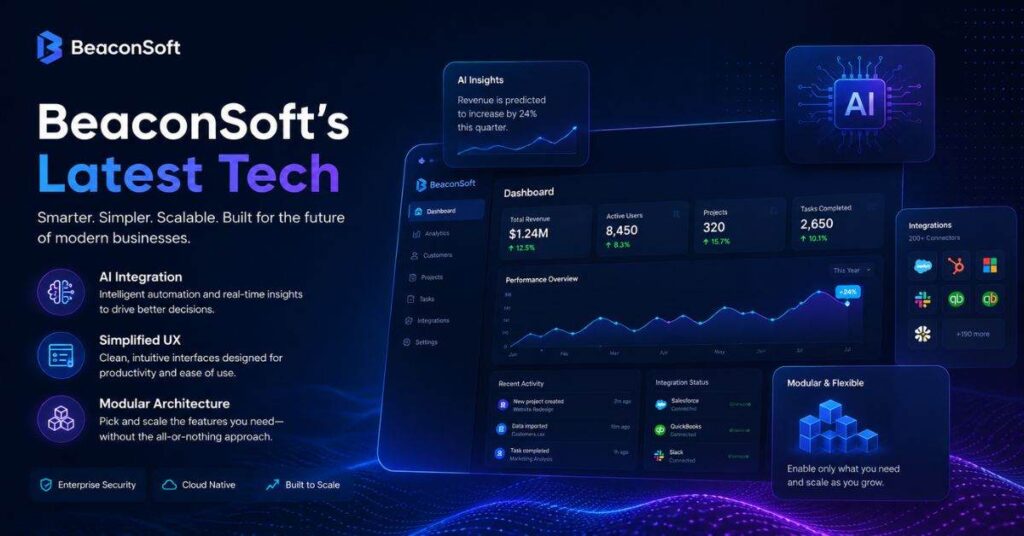
The newest releases focus on AI integration, simplified user interfaces, and modular architecture that allows businesses to adopt specific features without implementing the entire platform. Previous versions required more all-or-nothing commitments.
How long does a typical implementation take for a mid-sized company?
Most mid-sized organizations complete implementation in 6-10 weeks. This includes data migration, system configuration, integration setup, and user training. Phased rollouts may extend timelines but reduce disruption to daily operations.
Can Beaconsoft software integrate with the existing systems we already use?
Yes, Beaconsoft provides pre-built connectors for over 200 common business applications, including major CRM, ERP, and productivity tools. Custom integration options exist for specialized software through APIs and webhooks.
What level of technical expertise do users need?
Basic users need minimal technical knowledge. The interface uses familiar concepts similar to common productivity software. Advanced customization and automation building require moderate technical comfort but not programming skills.
Is customer data secure in Beaconsoft’s cloud environment?
Security includes enterprise-grade encryption, zero-trust architecture, regular security audits, and compliance with major standards like SOC 2 and GDPR. Data centers are geographically distributed with automatic backups and disaster recovery protocols.
What happens if we outgrow the platform?
The software scales with user count, data volume, and feature needs. Enterprise tiers support thousands of users. Data export capabilities ensure you’re never locked in if business needs change.sands of users. Data export capabilities ensure you’re never locked in if business needs change.
[…] Complete Guide Page Size Checker and Common Spelling Mistakes Beaconsoft Latest Tech Features Uses & Benefits Glossywise Com Explained Features, Uses & Benefits QuikConsole.com Best Console Platform […]