






Introduction
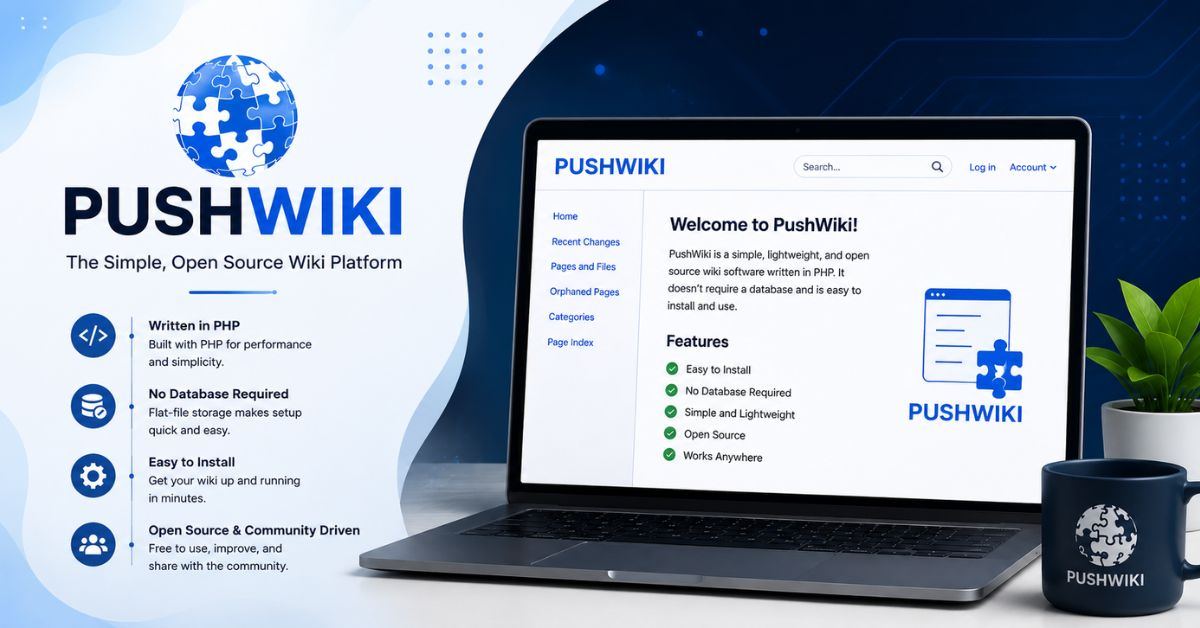
Pushwiki.com is a web-based knowledge management and collaborative wiki platform designed to help individuals and teams create, organize, and share structured information in one centralized digital space.
Most people stumble across Pushwiki.com while looking for a smarter way to organize information, either for their team, their project, or their personal knowledge system. But it’s not always clear what the platform does, how it compares to other tools, and if it’s right for you.
That confusion is worth fixing. If you’re spending time researching this platform, you deserve a clear and honest breakdown, not a vague list of features copied from a product page.
This guide explains what Pushwiki.com is, how the platform is built, what kinds of users benefit from it most, and what you should know before committing to it. By the end, you’ll have a solid picture of whether it fits your workflow.
What Exactly Is Pushwiki.com
At its core, Pushwiki.com is a knowledge base builder. Think of it as a tool that helps you create your own internal Wikipedia, one that’s private, organized around your needs, and accessible to whoever you give access to.
The “wiki” part of the name tells you a lot. A wiki is a type of website where content can be created, linked, and edited in a structured way. Unlike a simple document or a folder of files, a wiki creates connections between pieces of information. You can jump from one topic to another, follow threads of related content, and always find what you’re looking for without digging through layers of folders.
Pushwiki takes that concept and packages it into a modern, user-friendly platform. You don’t need coding knowledge or a server to set it up. You sign up, start creating pages, and link them together. The platform handles the rest.
Why Teams Use It
Here’s where Pushwiki.com becomes genuinely useful. The problem most small teams face isn’t a lack of information. It’s a lack of organization. Knowledge lives in people’s heads, in email threads, in Slack messages that scroll out of sight, or in documents nobody can find six months later.
Pushwiki.com gives teams a single place to put that knowledge and make it retrievable.
Imagine a 10-person marketing team at a software company in Austin, Texas. They have onboarding docs, campaign guidelines, style guides, meeting notes, and brand assets all scattered across Google Drive, Notion, and someone’s personal desktop. Every time a new hire joins, it takes weeks just to find the right files.
With a platform like Pushwiki.com, everything lives in one searchable space. New hires can navigate the wiki on their first day. Existing team members can update content without emailing anyone. And nothing gets lost.
Core Features Worth Knowing
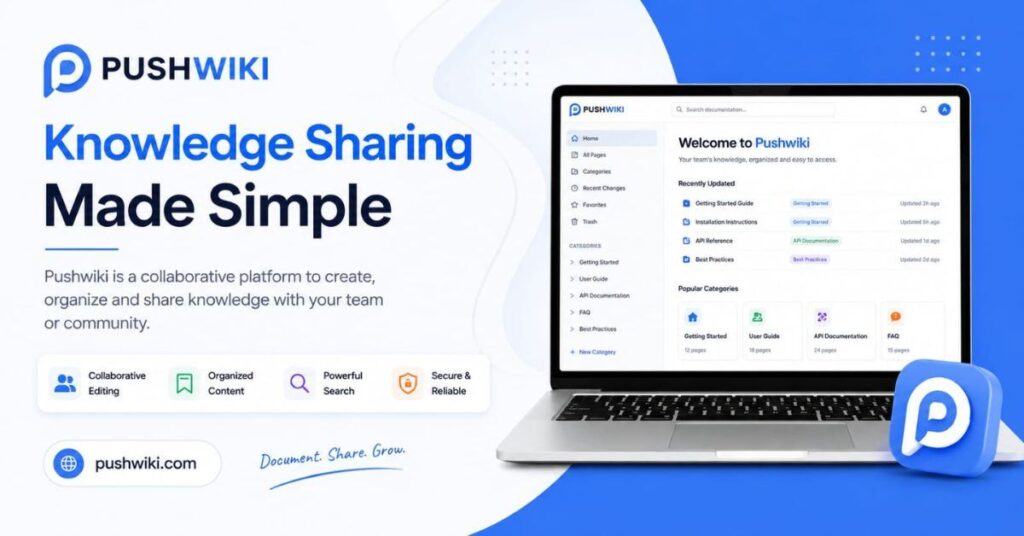
Understanding what Pushwiki.com actually includes helps you decide whether it matches what you need.
Page creation and linking
You create individual pages and link them to each other, just like a real wiki. This makes navigation intuitive rather than file tree-dependent.
Search functionality
Most wiki platforms live or die on search. If you can’t find something quickly, the whole system breaks down. Pushwiki includes search so users can locate pages by keyword.
Access control
You can manage who sees what. Some content might be public, while internal documentation stays private. This is useful for teams handling sensitive operational information.
Collaborative editing
Multiple people can contribute to and update pages. This removes the single-editor bottleneck that makes most documentation projects fall apart.
Clean interface
One of the more underrated advantages of Pushwiki.com is that it doesn’t overwhelm users with too many features. The interface stays clean, which lowers the barrier to adoption.

How It Compares to Other Tools
It’s fair to ask how Pushwiki.com sits next to tools like Notion, Confluence, or Coda. The honest answer is that each tool has a different weight class.
| Feature | PushWiki.com | Notion | Confluence |
|---|---|---|---|
| Setup complexity | Low | Medium | High |
| Best for | Small to mid teams | Individuals and teams | Enterprise teams |
| Collaboration | Yes | Yes | Yes |
| Customization | Moderate | High | Very High |
| Learning curve | Gentle | Moderate | Steep |
| Price point | Competitive | Freemium model | Higher at scale |
Notion is more flexible but also more complex to organize well. Confluence is powerful but built for larger enterprise environments and can feel heavy for smaller setups. Pushwiki.com sits in a practical middle ground. It’s purpose-built for documentation without the feature overload that makes other platforms feel overwhelming.
If you just need a clean, organized wiki that your team can actually use without a training course, Pushwiki.com is worth serious consideration.
Who Gets the Most Value From Pushwiki.com
Not every tool is right for every situation. Here’s an honest picture of who benefits most.
Small business owners
who want to document their processes, standard operating procedures, and policies without hiring a technical team to set it up.
Remote team
spread across time zones who need asynchronous communication to work properly. When your developer in New York and your designer in London can’t always hop on a call, a well-structured wiki bridges that gap.
Content creators and bloggers
who want to build a public-facing knowledge hub around a topic, organized in a way that’s more navigable than a blog archive.
Educators and coaches
who work with recurring groups of students or clients and want to centralize course materials, resources, and FAQs without relying on email.
Startups and growing teams
who know they’ll eventually need documentation but want to start lean without enterprise pricing.
What Are the Limitations?
Being honest about limitations is just as important as highlighting strengths. Pushwiki.com is a focused tool. That focus is a strength, but it also means it won’t replace every platform you use.
If you need advanced project management task assignments, Gantt charts, and dependency tracking, you’ll still want a dedicated project tool alongside it.
If you need deep integrations with dozens of other software platforms out of the box, you may find the integration ecosystem more limited than Notion or Confluence.
And like many platforms in this space, the value of the tool scales directly with how consistently your team uses and maintains it. A wiki that nobody updates becomes a liability, not an asset. That’s a people problem more than a platform problem, but it’s worth knowing upfront.
Getting Started With Pushwiki.com
The entry point is straightforward. You visit Pushwiki.com, create an account, and begin building your first wiki space. The platform walks you through the setup without assuming any technical background.
A practical first step is to map out your top five to ten most-needed pages before you start building. Common starting points include an onboarding guide, a company or project overview, an FAQ page, and a processes document.
Start simple. Add pages as the need arises. Resist the urge to build a perfect structure from day one; the best wikis grow organically alongside the team using them.
FAQ.
What is Pushwiki.com used for?
Pushwiki.com is used to create and manage structured knowledge bases, most commonly for team documentation, internal wikis, and shared information hubs. It helps individuals and organizations organize information in a way that’s searchable, linkable, and accessible to the right people, making it much easier to find and update content compared to scattered documents or email threads.
Is Pushwiki.com free to use?
Pushwiki.com offers access options for users, though the specific pricing tiers depend on the plan you choose. Like most SaaS tools in this space, there may be a free tier with limited features and paid plans that unlock additional storage, collaboration options, or private workspaces. It’s worth checking the current pricing page directly for the most accurate and up-to-date information.
How is Pushwiki.com different from a regular website or blog?
Unlike a blog, which presents content in reverse-chronological order, Pushwiki.com organizes information by topic and allows pages to be linked together, making it easier to navigate and update. A blog is designed for publishing; a wiki is designed for organizing and retrieving. The difference becomes clear when you try to find a specific procedure or document in a two-year-old blog archive versus a well-structured wiki.
Can Pushwiki.com be used for public-facing content?
Yes, Pushwiki.com can support publicly accessible wikis, making it useful for help centers, community knowledge bases, or educational resources. Teams can choose to make certain pages or entire wikis visible to anyone while keeping other sections private. This makes it a flexible option for businesses that want both internal documentation and a public-facing FAQ or support hub.
Is Pushwiki.com good for small teams?
Pushwiki.com is particularly well-suited for small to mid-sized teams who want the benefits of a structured wiki without the complexity of enterprise platforms. The learning curve is gentle, the setup is quick, and the interface doesn’t require technical expertise. For teams of 5 to 50 people, it often hits the right balance between simplicity and functionality.
How does Pushwiki.com handle collaboration?
Pushwiki.com supports multiple contributors, allowing team members to create, edit, and update pages without going through a single editor. This distributed contribution model is what makes wikis work in practice. Rather than one person becoming the bottleneck for all documentation, any team member with the right permissions can keep the knowledge base current and accurate.
[…] Complete Guide Only Work Moods.com for Beginners What Is Pushwiki.com? A Complete Guide 2026 Droven.io Best Tech Tools for Developers in 2026 Complete Guide Online Game Event PBLGamevent […]